“Odesa has one hundred and thirty-three thousand inhabitants and is developing faster than any small city outside America. Odesa is an open port and the largest grain market in Europe. When I came ashore, I stepped onto the Odesa Bridge and, for the first time after a long absence, finally felt at home”.
Mark Twain
«The Innocents Abroad, or The New Pilgrims’ Progress» (1867)
The history of Odesa is the history of a multicultural, multinational and cosmopolitan city with a rich literary heritage. The works of Odesa authors have been translated into many languages around the world. At different times, writers who are now known throughout the world lived, found inspiration and created their works in Odesa.
Alexander Pushkin was exiled to the city for anti-Tsarist activities and dedicated one of the chapters of «Eugene Onegin» to Odesa. In 1850, Nikolai Gogol worked here on «Dead Souls». Odesa is also associated with periods of the life and creative work of Ivan Kotliarevsky, Mykhailo Kotsiubynsky, Ivan Bunin, Vladimir Jabotinsky, Ivan Franko, Anna Akhmatova, Mykola Kulish, Georges Simenon and many others. Odesa’s «London» Hotel welcomed such famous guests as Anton Chekhov, Robert Louis Stevenson, Louis Aragon and Elsa Triolet.
In 2019, Odesa was officially recognized as a UNESCO Creative City in the «Literature» category, which became a significant cultural achievement. This recognition highlighted the city’s rich literary heritage, which was shaped over more than 100 years by the exceptional talent of Odesa’s writers, poets and playwrights. The legends of Odesa, its port atmosphere, architectural masterpieces and unique sense of humour have become part of the world’s literary heritage. UNESCO recognition highlights Odesa’s important role in global culture and literature. The city is part of the UNESCO Creative Cities Network in the «Literature» category, which today includes 52 cities from 37 countries around the world.
Outstanding writers who were born or worked in Odesa
Outstanding writers who were born or worked in Odesa
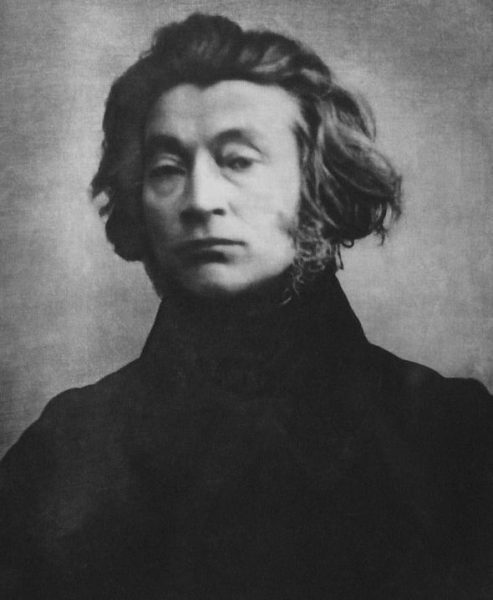
Adam Mickiewicz
1798–1855
The world-famous Polish Romantic poet Adam Mickiewicz spent several months in Odesa. He was appointed a lecturer in linguistics at the Richelieu Lyceum and received a salary, but in fact never taught. During his stay in the city, he wrote the famous «Odesa Sonnets» and part of the «Crimean Sonnets». The collection caused a strong reaction among readers.
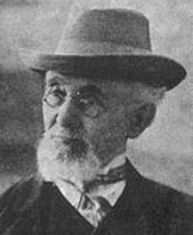
Mendele Mocher Sforim
1836–1917
An outstanding Jewish writer who by the end of his life had acquired the unofficial status of a classic and founder of modern Jewish literature. From 1881, he lived and worked in Odesa, exerting a major influence on many of his contemporaries, including the famous writer Sholem Aleichem. Mendele Mocher Sforim («Mendele the Bookseller») wrote in Yiddish, but later translated his works into Hebrew, making an invaluable contribution to the development of both languages.
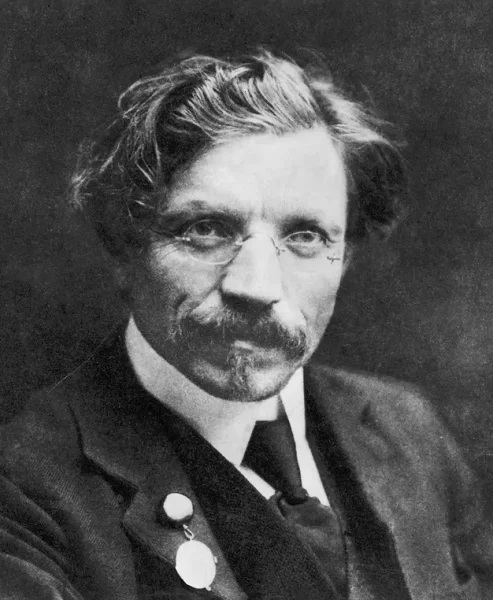
Sholem Aleichem
1859–1916
Sholem Aleichem, born Sholem Rabinovich, first used his famous pseudonym in 1883. He lived in Odesa from October 1891 to May 1893, actively collaborating with the local newspapers «Odessky Listok» and «Odesskiye Novosti». During this period, he published poems, fairy tales and the first version of his novel «Menachem-Mendl». He also unsuccessfully engaged in stock-market speculation. Sholem Aleichem wrote mainly in Yiddish, and critics called him the «Jewish Mark Twain». When the two writers met, Mark Twain humorously remarked that he considered himself an «American Sholem Aleichem».
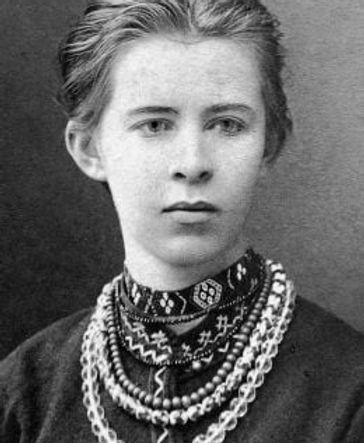
Lesya Ukrainka
1871–1913
Lesya Ukrainka visited Odesa between 1888 and 1913 while undergoing treatment for tuberculosis at the Khadzhibey mud resort. She admired the city and dedicated poems to it, which were included in her poetry collection «Journey to the Sea».
Konstantin Paustovsky
1892–1968
During his lifetime, the works of Konstantin Paustovsky were translated into 68 languages — essentially all the major languages of the world. In the 20th century, the total circulation of his books reached 70 million copies. According to researchers, his books were published 600 times on five continents. In the 1960s, a five-volume collection of his works was published in Munich with a foreword by Heinrich Böll.
Isaac Babel
1894–1940
Isaac Babel was persecuted for four years because of his collection of short stories «Red Cavalry», as the realism of his descriptions did not correspond to Soviet propaganda. The vivid characters of the «Odesa Stories» — well-known smugglers and adventurers from the Moldavanka district — became Odesa’s literary calling card. Babel masterfully combined humour and tragedy in his works. Ernest Hemingway considered Babel’s style even more concise than his own. Jorge Luis Borges wrote:
«The music of his style contrasts with the almost indescribable cruelty of certain scenes. One of his stories — «Salt» — achieved a level of fame characteristic of poetry, something prose rarely achieves: many people know it by heart».
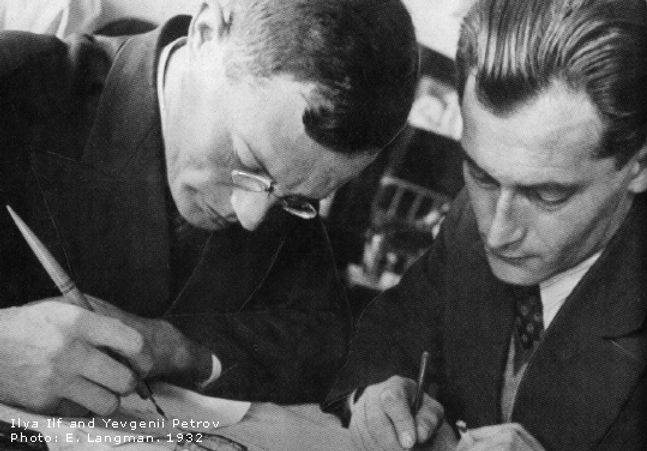
Ilya Ilf and Yevgeny Petrov
(1897–1937) – (1902–1942)
Both satirical writers were born in Odesa. Both lived for only 39 years. Their most famous novel «The Twelve Chairs» was adapted for the screen 22 times in 15 different countries between 1933 and 2016. The countries that produced adaptations include Poland, Czechoslovakia, the United Kingdom, Germany, the United States, Sweden, Brazil, Cuba, the USSR, Italy, France, Austria, Iran and Lithuania.
Valentin Kataev
1897–1986
A writer, playwright and journalist, Kataev’s novel «The White Sail Glitters» became a classic of literature for children and adults. He was also one of the founders of the well-known literary magazine «Yunost».
Yury Olesha
1899–1960
The author of the novel «Envy» and many outstanding plays and short stories, Olesha possessed a unique ability to capture the psychology of his characters. He often explored themes of social conflict. His novel inspired «L’Envie» («Envy») — a work by French writer Eugène Sue, one of the pioneers of the sensational crime genre in popular literature. «Envy» received favourable reviews from Vladimir Nabokov and others.
Alexander Kuprin
1870–1938
A prolific novelist and short-story writer, best known for «The Garnet Bracelet». During his stay in Odesa, Kuprin wrote «Gambrinus», published in 1907, which made the local beer hall famous among writers and journalists. In a sense, «Gambrinus» can be considered a precursor to the first literary cafés of the 1920s.
Odesa has always been a crossroads of cultures and ideas, a city where artists from around the world have found inspiration for their creative work. It is more than just a geographical location; it is a cultural phenomenon with an infinite capacity to inspire.